TRANSPORTATION COMPARISON CHART (Hourly Capacity)
UDOT's avalanche team is located in a squalid dilapidated concrete bunker structure that is severely outdated and woefully inadequate for mountain operations.
DEDICATED CANYON SNOWPLOWS


UDOT's snowplow operators are highly competent and capable professionals who work tirelessly to keep Utah's roads safe during winter storms. However, it appears systemic limitations and policies imposed by leadership—such as inadequate planning, funding and understaffing for snow removal—have created challenges that exacerbate congestion and safety risks in high-snow areas like Little Cottonwood Canyon (LCC).
This under-resourcing appears to align with a "bucket system" policy where plows are deployed based on priorities, often leaving secondary routes like SR-210 as an afterthought. While every road deserves priority for clearance to ensure public safety, the current approach prioritizes major highways, leading to reactive rather than proactive maintenance in the canyons where snowfall is heaviest—resulting in heavy accumulation, spinning vehicles, and reduced throughput.
In previous winters, the lack of dedicated road maintenance in Little Cottonwood Canyon has led to poor conditions, including snow-packed roads, reduced visibility, and hazardous driving—exacerbating congestion and safety risks on SR-210.
The closest UDOT snow plow is parked 15 miles away in the Salt Lake Valley. When a storm hits, UDOT plows are dispatched by “priority” — and Little Cottonwood Canyon is not at the top of the list. I-80, I-15, Parleys all get cleared first. By the time a snowplow is dispatched the mountain road is already buried and gridlocked. Hence the need for wheel chains.
UDOT is also responsible for plowing the Alta Bypass Road — the narrow, steep service route connecting Snowbird and Alta that bypasses avalanche-prone sections of Hellgate and Superior. The Bypass is chronically neglected too, often becoming a snow-packed nightmare causing gridlock with 23 merge points.
Solutions are within reach.
UDOT needs a dedicated snowplow in Alta, and to provide basic winter road maintenance, consistently. Best practices and common sense dictate consistent winter road maintenance to keep surfaces clear for safety and efficiency—preventing spin-outs and allowing more throughput of cars and buses to access and exit the canyon.
Stationing dedicated snowplows in Alta would be strategic and optimal engineering, aligning with the "greatest snow on earth" by prioritizing where it snows the most—without the spectacle of social media announcements for routine plows.
Proactive measures like dedicated canyon plows could resolve congestion issues at a fraction of the cost—saving taxpayers and aligning with residents and community opposition.
The real fix is simple, cheaper and safety-focused: Station a snowplow in Alta, so these mountain roads can be cleared quickly and frequently. A single Mack truck snowplow = $300k.
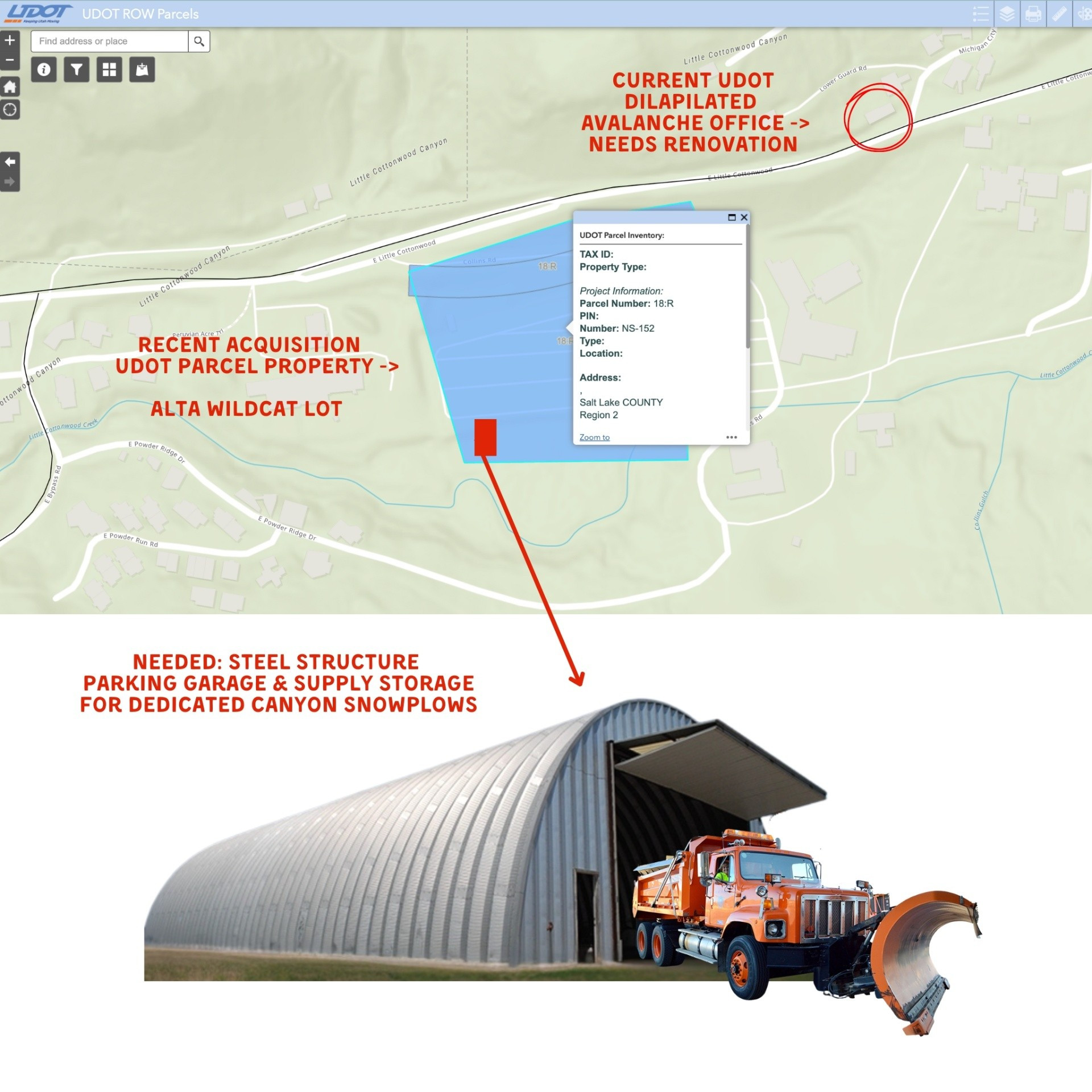
With UDOT's recent ROW acquisition of the Alta Wildcat parking lot, a temporary steel hut needs to be installed for quick snowplow deployment.
Private Vehicles (900 vph x 2.5 avg people)
PPH: 2250 | █████████████████████
Current Buses (20 buses x 42 people)
PPH: 840 | ████████
Additional Buses (70 buses x 42 people)
PPH: 2940 | ████████████████████████████
Combined Enhanced (Private Vehicles + Additional Buses)
PPH: 5190 | ██████████████████████████████████████████████████
Gondola (30 Cabins x 35 Max Capacity)
PPH: 1050 | █████████
Gondola (30 Cabins x 25 Capacity w/ ski gear)
PPH: 750 | ██████
PRIORITIZE ROAD SAFETY
COMMON SENSE SOLUTIONS FOR ROAD SAFETY & CONGESTION
ALTA UDOT STATION
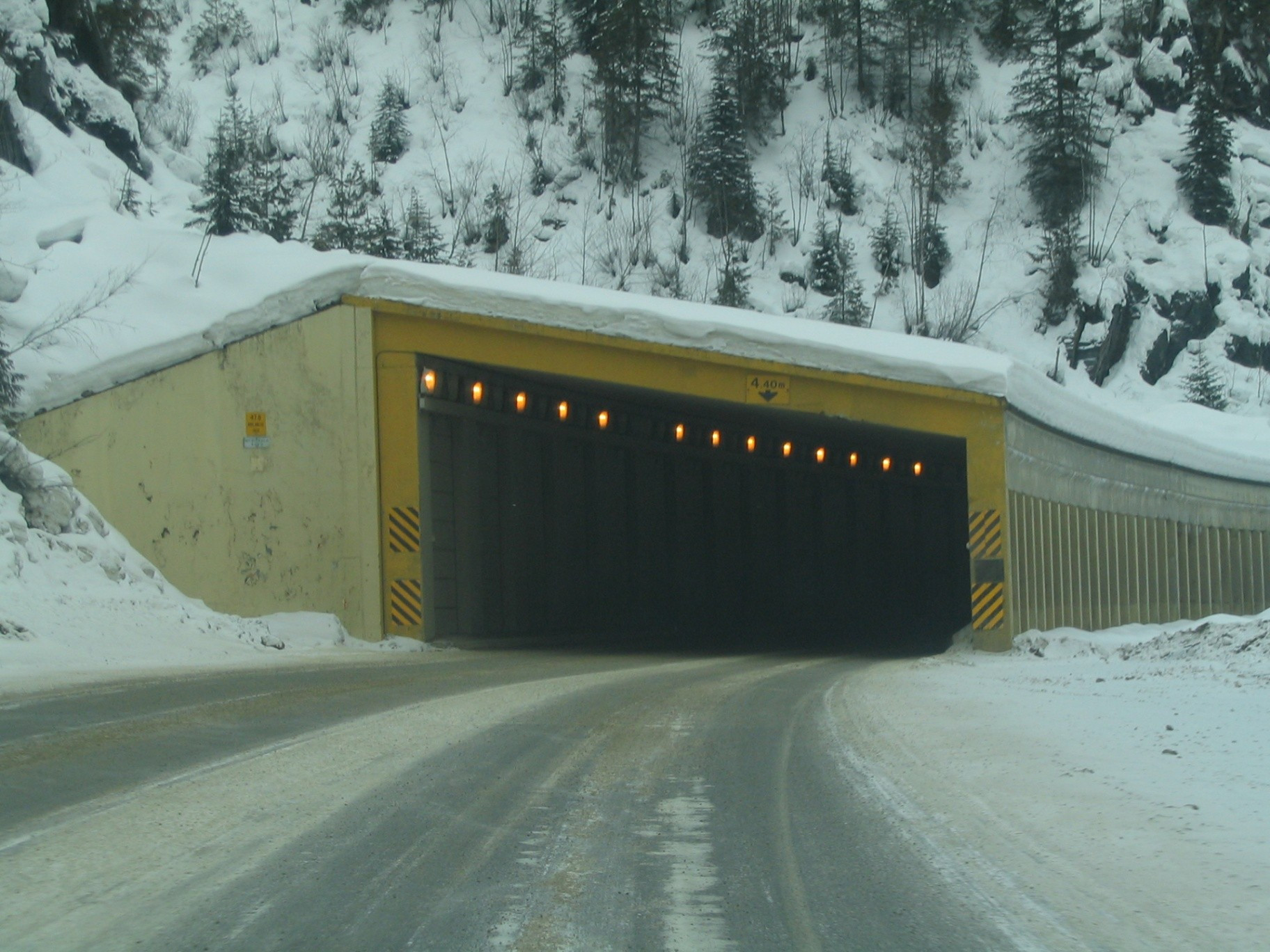
SNOW SHEDS - AVALANCHE TUNNELS
ADDITIONAL WINTER BUSES
Additional 40' ski buses on powder days are needed, instead of the current 20–25, per EIS. The current price of single 40-Foot Electric Buses (Suitable for 42 Passengers) = $1.1 million-$1.3 million.
For less than 5% of the gondola’s cost, we keep the road open, eliminate most traffic jams, and never have to scar the canyon with a $2 billion gondola that won’t even run in the weather we need it most.
Snowplows + Buses = problem solved.
Deep-dive blog post: Little Cottonwood Canyon's Bus Dilemma: Poor Planning & Improvements Needed
LONG TERM SOLUTIONS
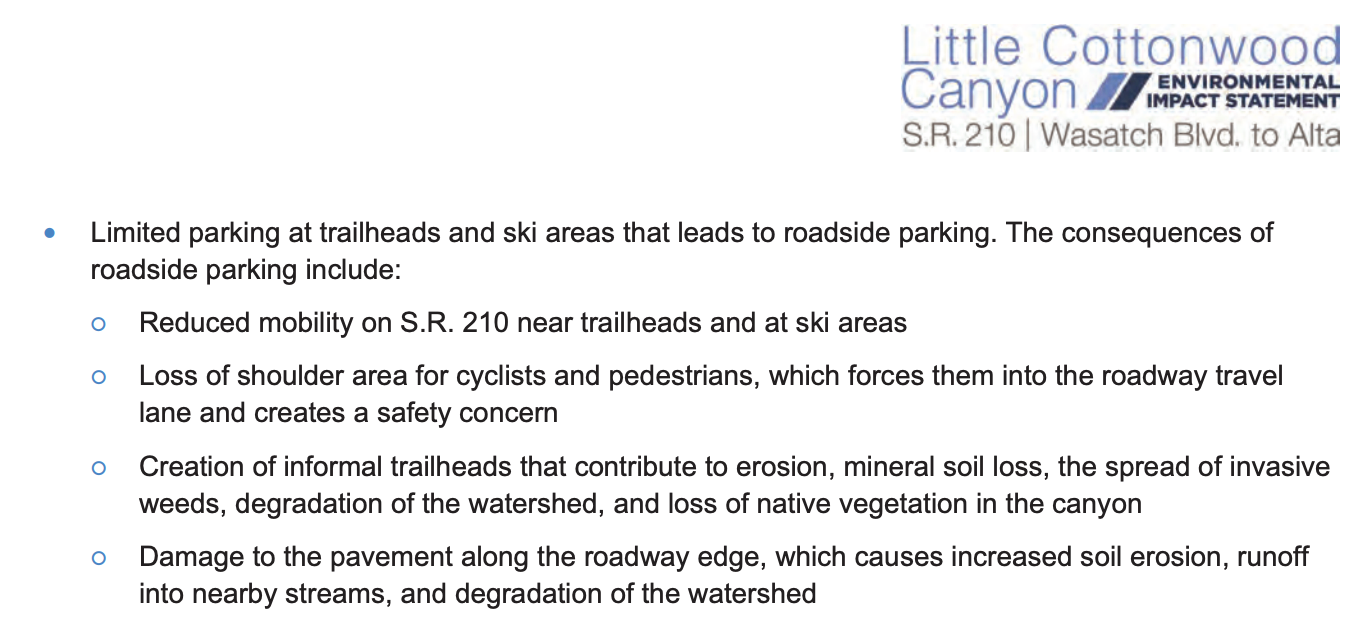
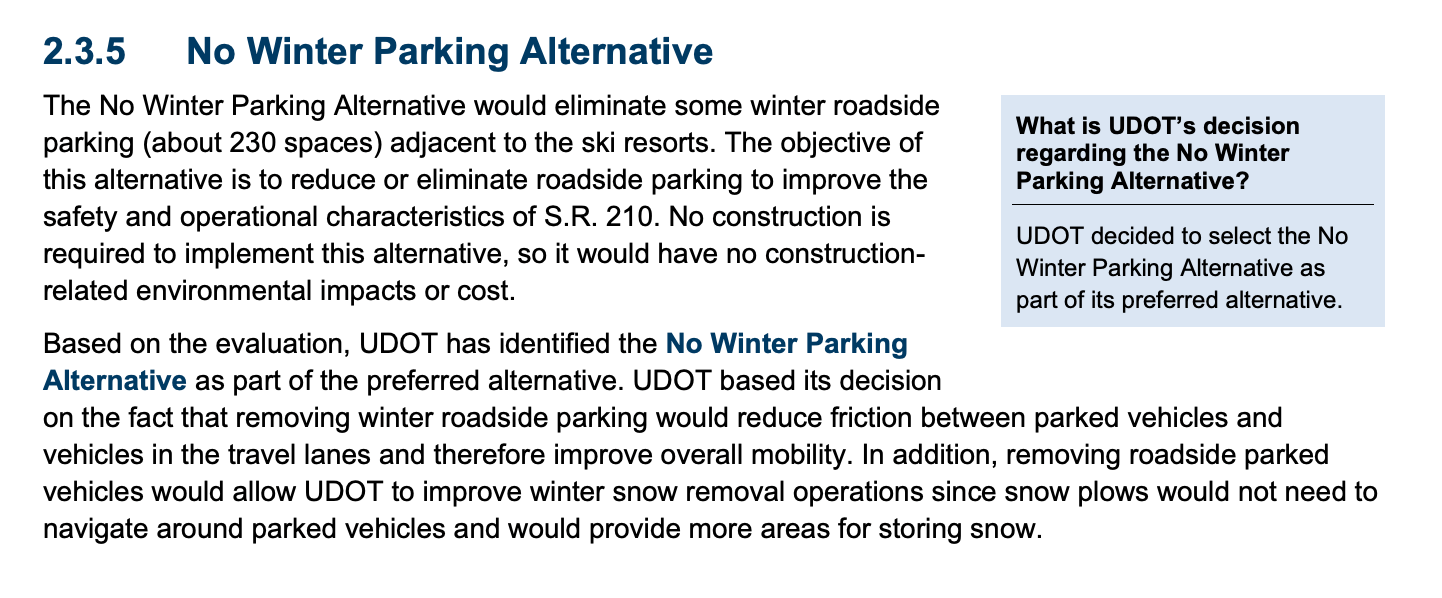

UDOT EIS even recommends "No Winter Parking"
— yet overrides this to the benefit of additional Snowbird parking inventory, per EIS data.
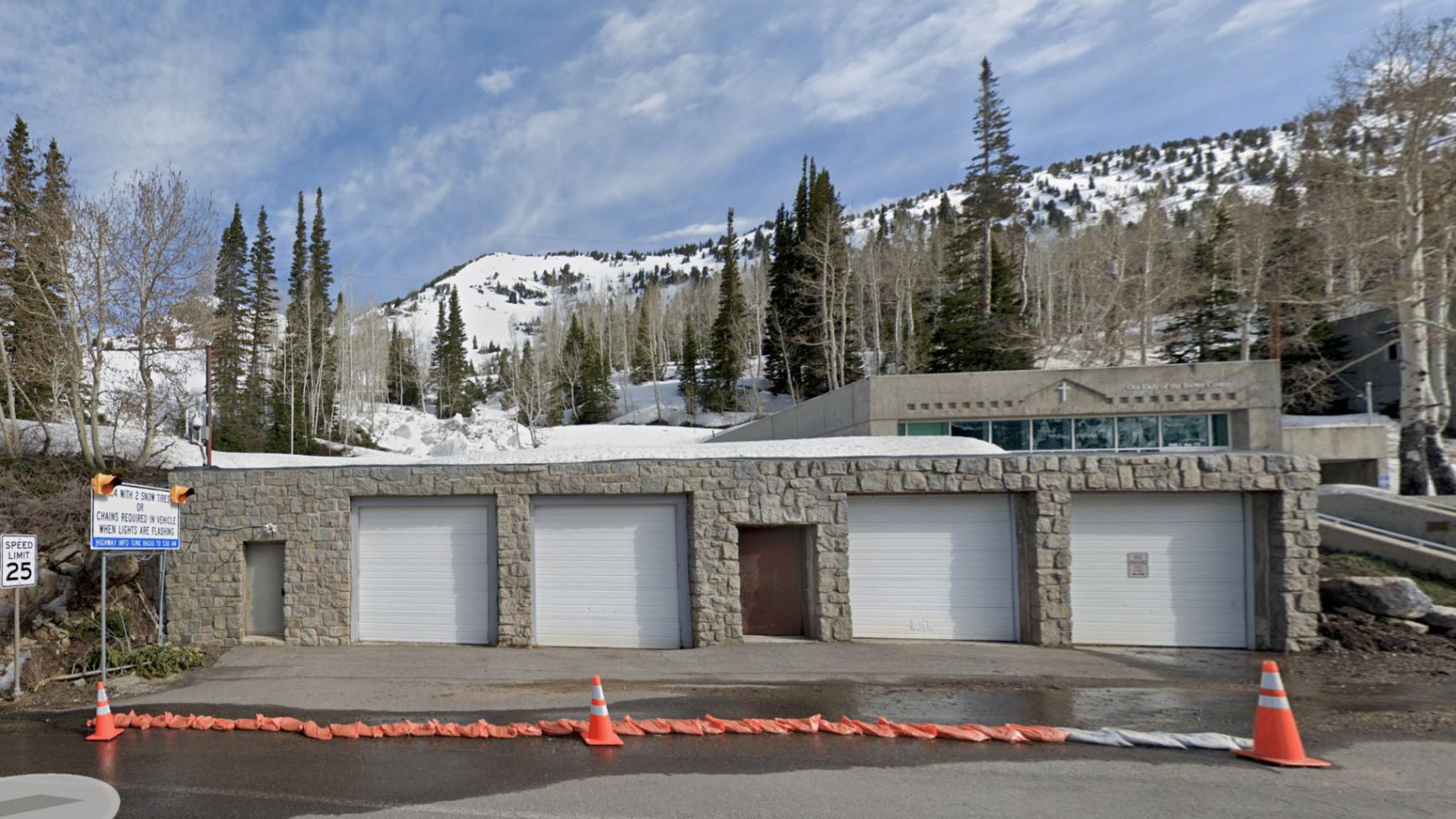
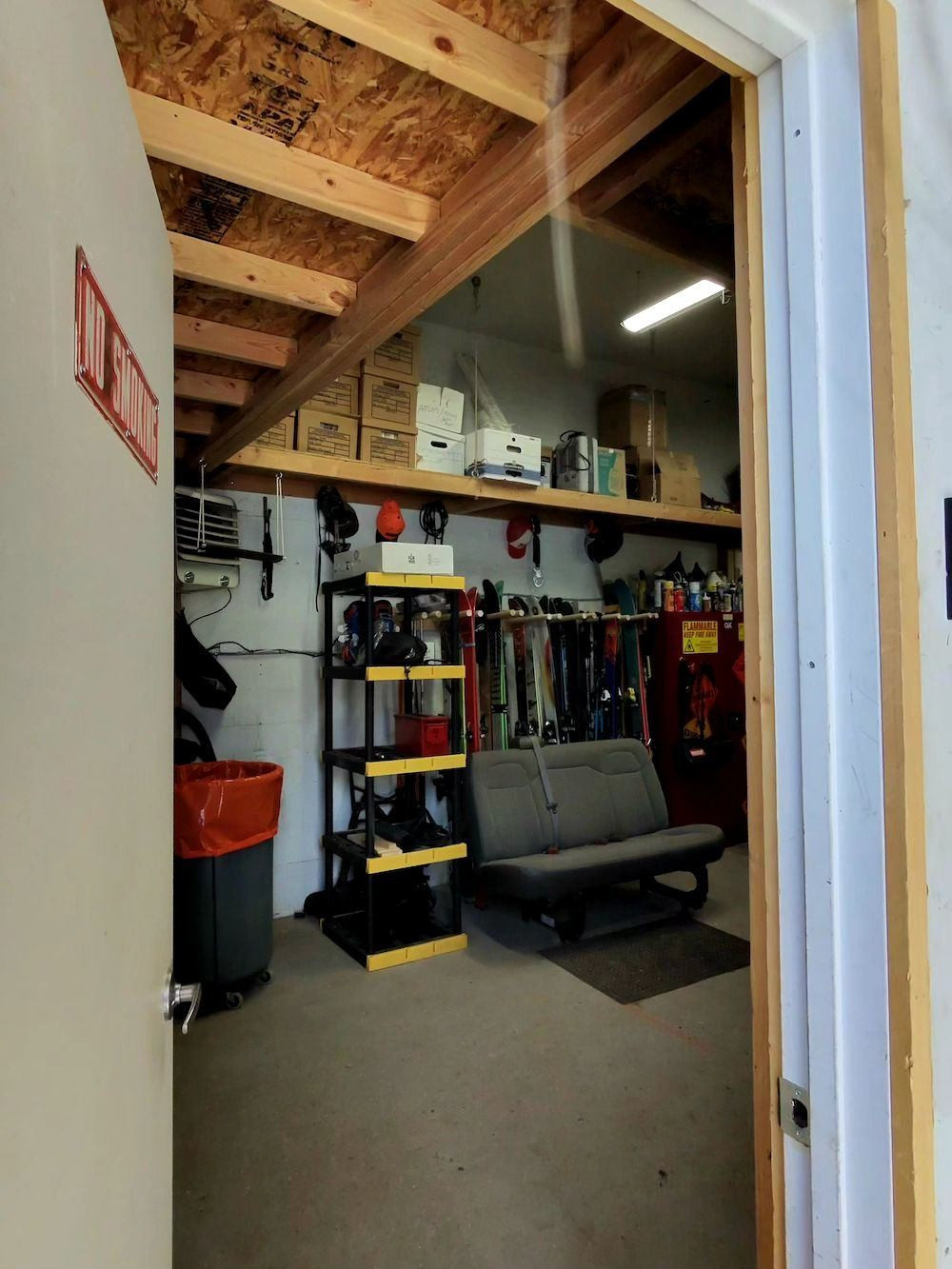
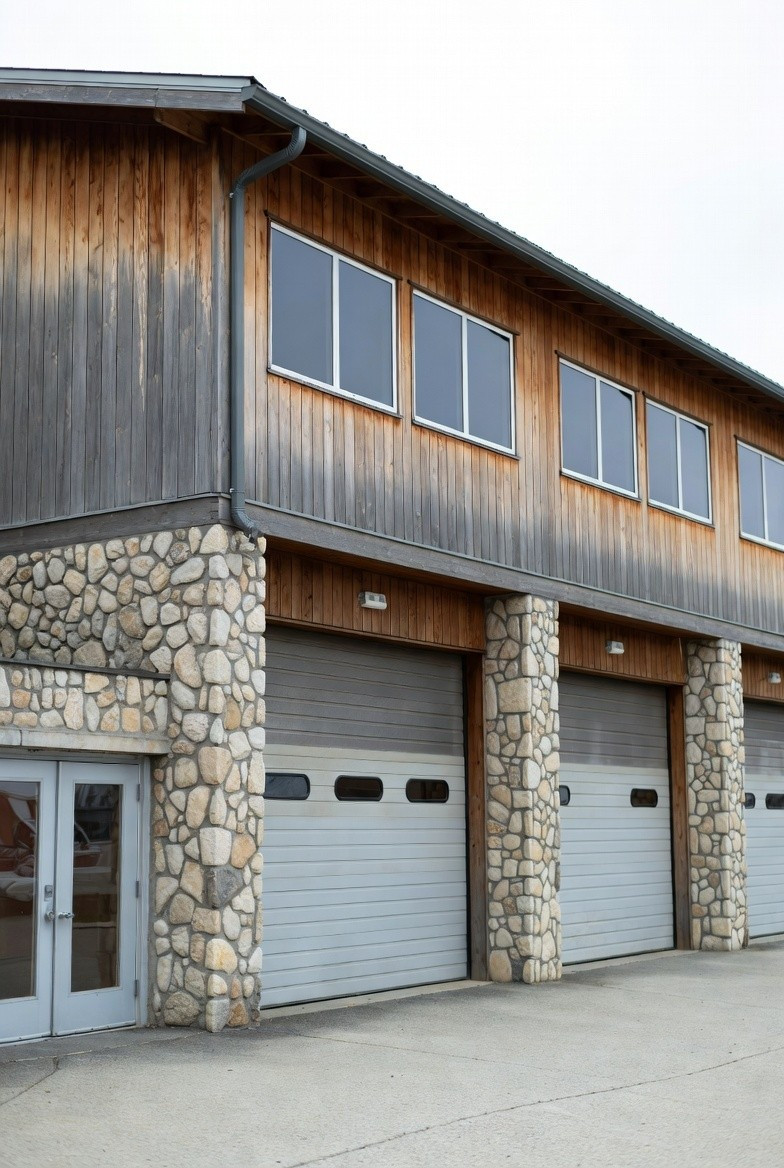
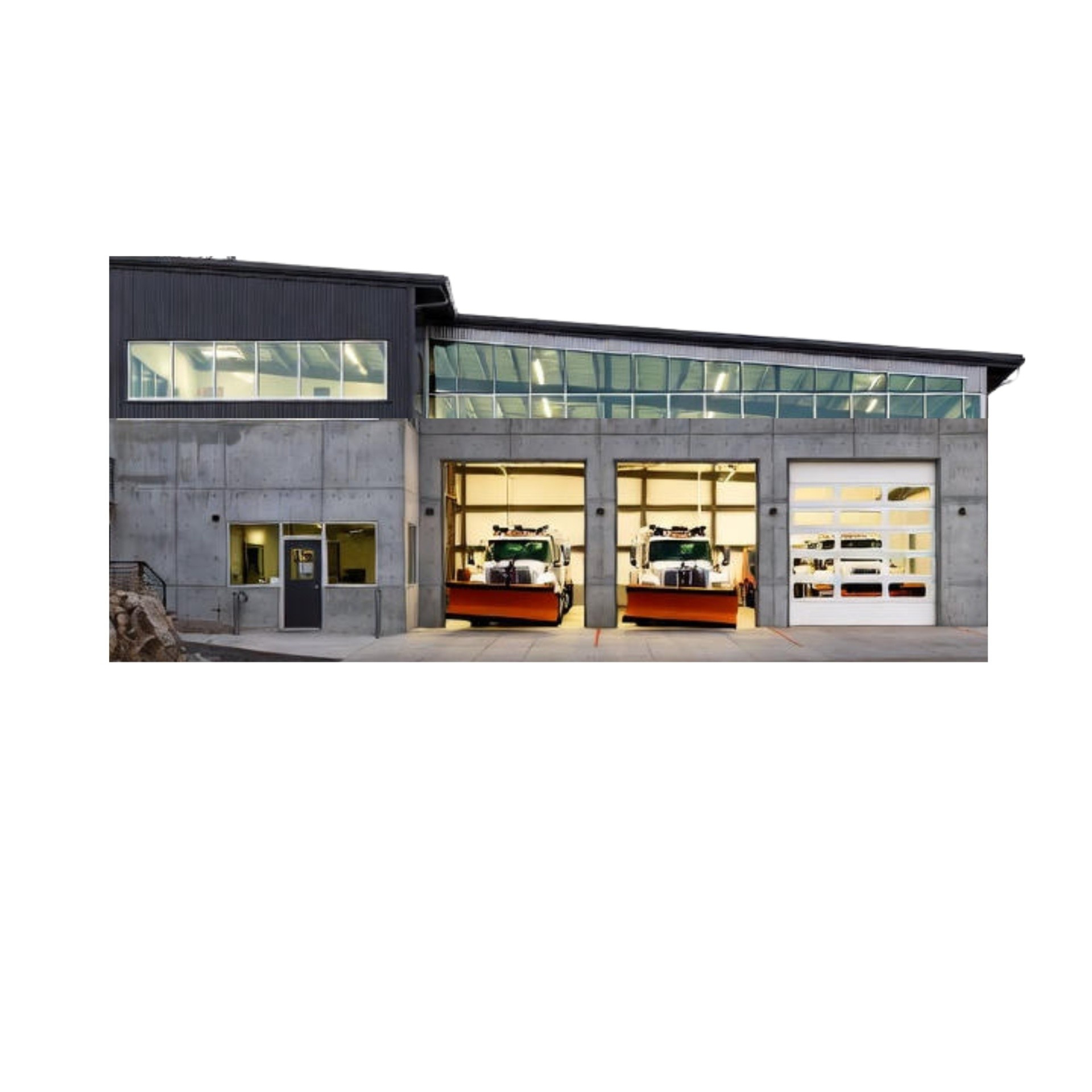
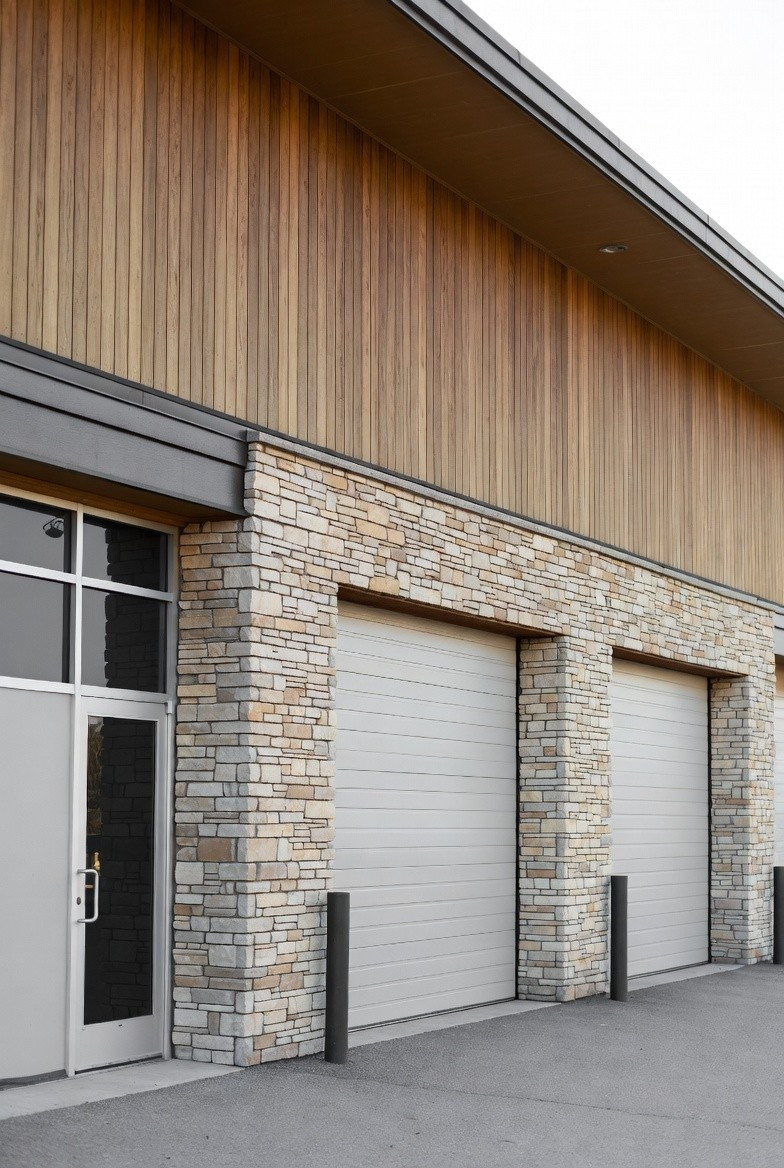
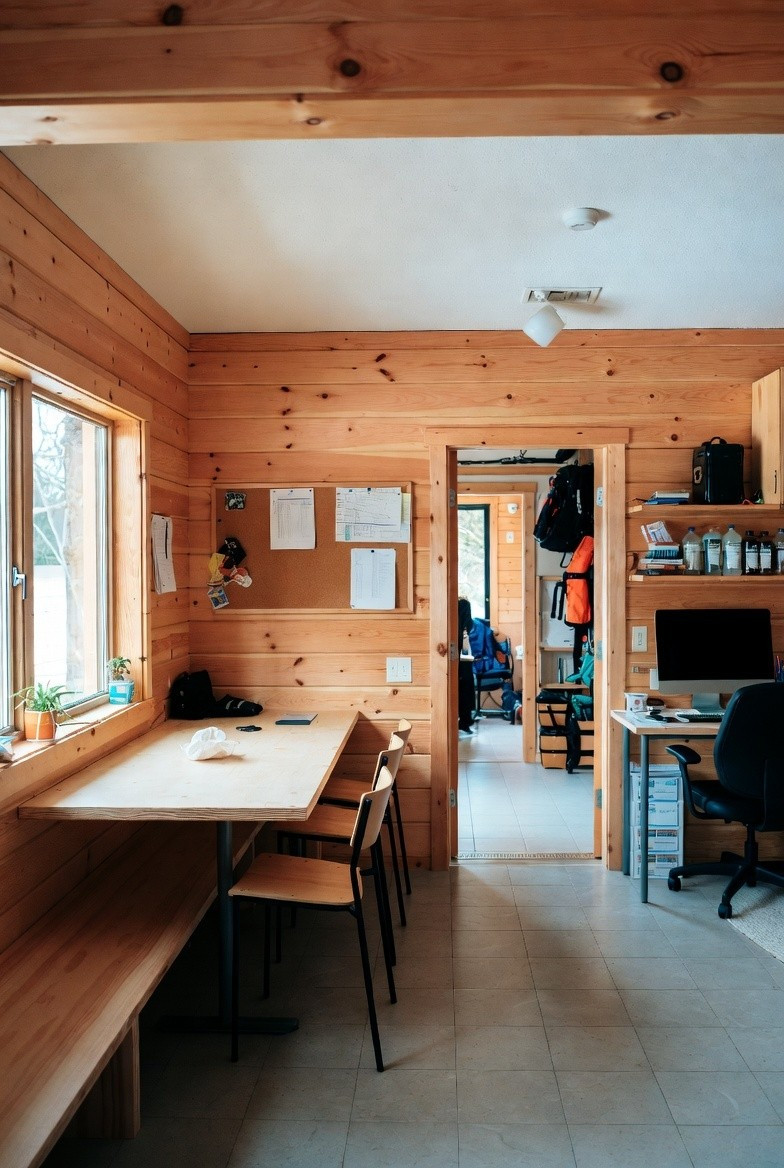
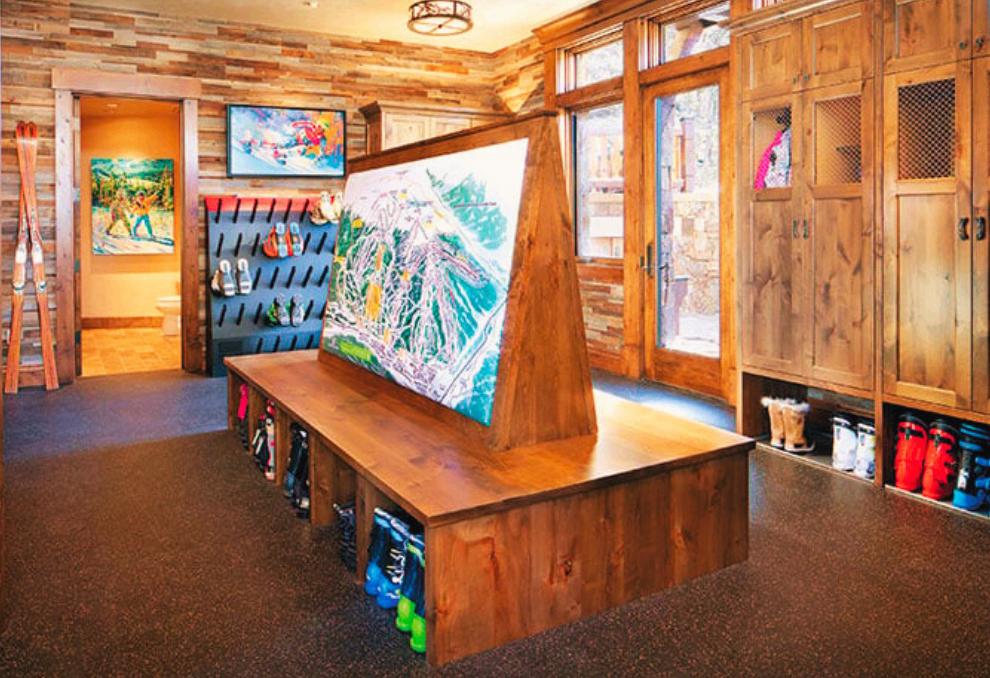
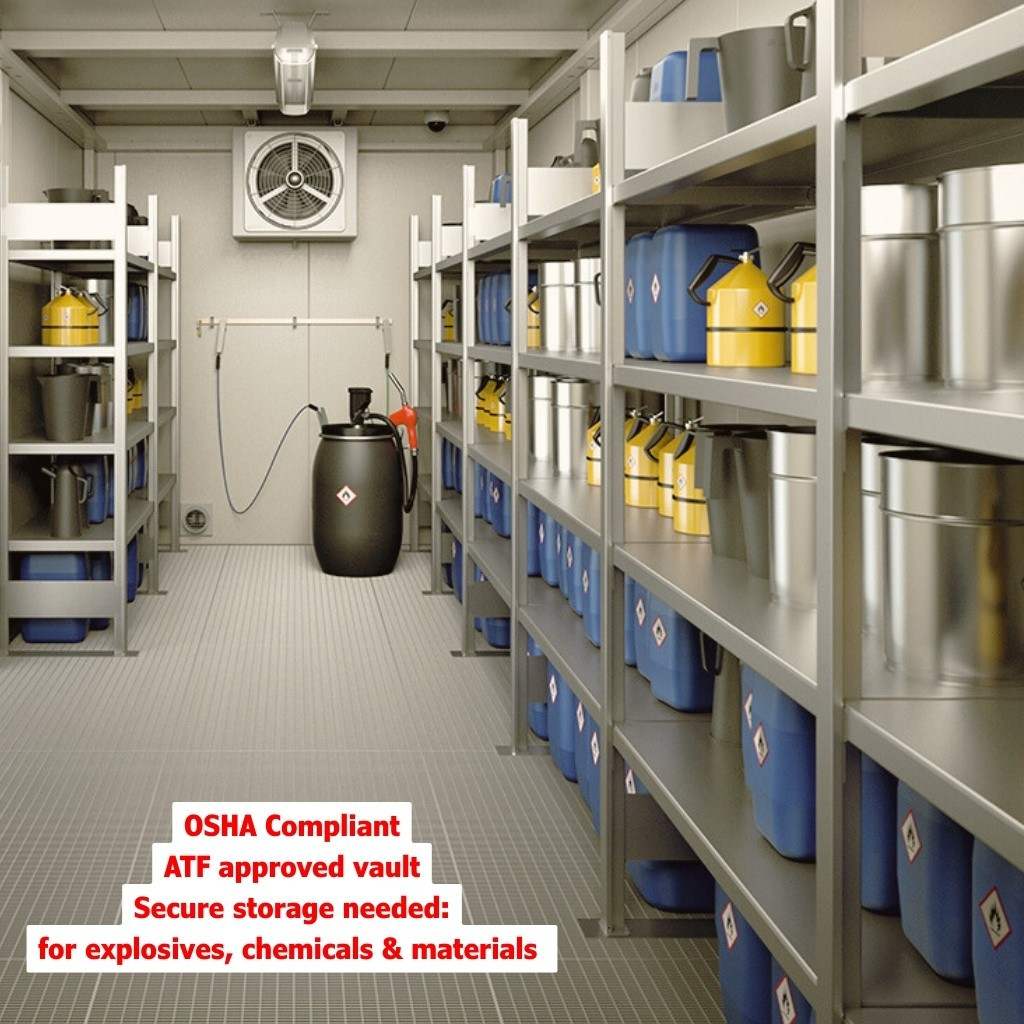
One key solution is the renovation of the Alta UDOT Station, which would equip avalanche control teams and snowplow crew with the tools they need to protect canyon users year-round. By investing in targeted upgrades, we can improve operational efficiency, reduce risks, increase UDOT crew safety and deploy snowplows quickly to maintain optimal, safe road conditions 24/7. Needed renovations include:
Dedicated Avalanche Crew Office:
A modern workspace for planning and coordinating avalanche mitigation efforts, ensuring quick response times during high-risk periods.
Mud Room for Gear Storage:
Specialized area for skis, boots, and outdoor equipment, keeping essential tools organized and ready for immediate deployment.
Secure Storage for Explosives and Supplies:
Compliant, high-security facilities to safely store critical materials and supplies, minimizing hazards and complying with federal safety standards.
Garage for Snowplows and Vehicles:
Protected storage to maintain equipment in peak condition, enabling faster road clearing.
Kitchen and Bedrooms for Overnight Shifts:
Comfortable on-site accommodations to support 24/7 staffing during severe weather, reducing fatigue and enhancing crew readiness.
Common Meeting Area for Rescue Operations:
A centralized hub for multi-agency coordination during emergencies, streamlining rescue efforts.
For $6 million, these upgrades and essential features represent a fraction of the gondola's cost while directly addressing road safety. UDOT needs to focus on proven, ground-level enhancements and redirect funds to real safety measures that work for everyone.
Roadside Parking on SR-210 Is Risky and Dangerous: No Safe Exit
Roadside parking of 200 cars between Snowbird Entries 1–4 narrows the road, slows downhill traffic
from Alta, and forces illegal maneuvers—leading to head-on collision risks and gridlock.
This roadside parking is risky and can endanger lives when exiting, by forcing illegal U-turns across double yellow lines and unsafe merges, while this appears to allow Snowbird to benefit from free overflow parking, per EIS parking data, without requiring more resort lots.
Exiting drivers lack dedicated infrastructure like intersections, lights, or roundabouts. Instead, they perform illegal three-point U-turns across double yellow lines into oncoming uphill traffic or merge unsafely with downhill flow.
UDOT's job is to ensure highway road safety—not increase resort parking inventory, per EIS data.
Stop the
$2 Billion Dollar Super Gondola
Little Cottonwood Canyon (SR 210) is one of North America's most avalanche-prone highways, leading to frequent closures, safety risks, and traffic backups during winter. Managed by the Utah Department of Transportation (UDOT), the road serves as the primary access to popular ski resorts like Alta and Snowbird, handling heavy recreational traffic alongside commercial and emergency vehicles. Key deficiencies include:
Frequent Closures and Delays: SR 210 often closes for avalanche mitigation (using remote systems or artillery), snow removal, or crashes caused by slick conditions. Closures can last hours or days, with UDOT reporting high avalanche risk on over 30 paths crossing the road. For example, in March 2023, an avalanche hit vehicles after a closure, and in April 2024, a major crash shut down the canyon. These interruptions strand skiers, disrupt resort operations, and create backups at the canyon mouth.
Inadequate Snow Removal Capacity: UDOT plows during and after storms, but the steep, narrow canyon (with limited shoulders) limits equipment deployment. Snow accumulation can exceed plowing speed, leading to "snow and slick" conditions in mid-to-upper sections. Avalanche debris adds complexity, requiring specialized clearing.
Traction and Safety Issues: Despite Utah's Traction Law (requiring all-season tires with 3/16-inch tread or chains/snow tires), enforcement is challenging. Poor visibility, black ice, and driver inexperience contribute to accidents, exacerbating maintenance backlogs.
Environmental and Operational Strain: De-icers like salt and magnesium chloride are used, but runoff impacts watersheds. High traffic (up to 10,000 vehicles/day in peak winter) overwhelms the two-lane road, leading to congestion that hinders plow access.
These issues contribute to calls for alternatives like the proposed gondola, but as we'll see, targeted improvements in snowplowing—drawing from proven practices elsewhere—could address them at a fraction of the cost.
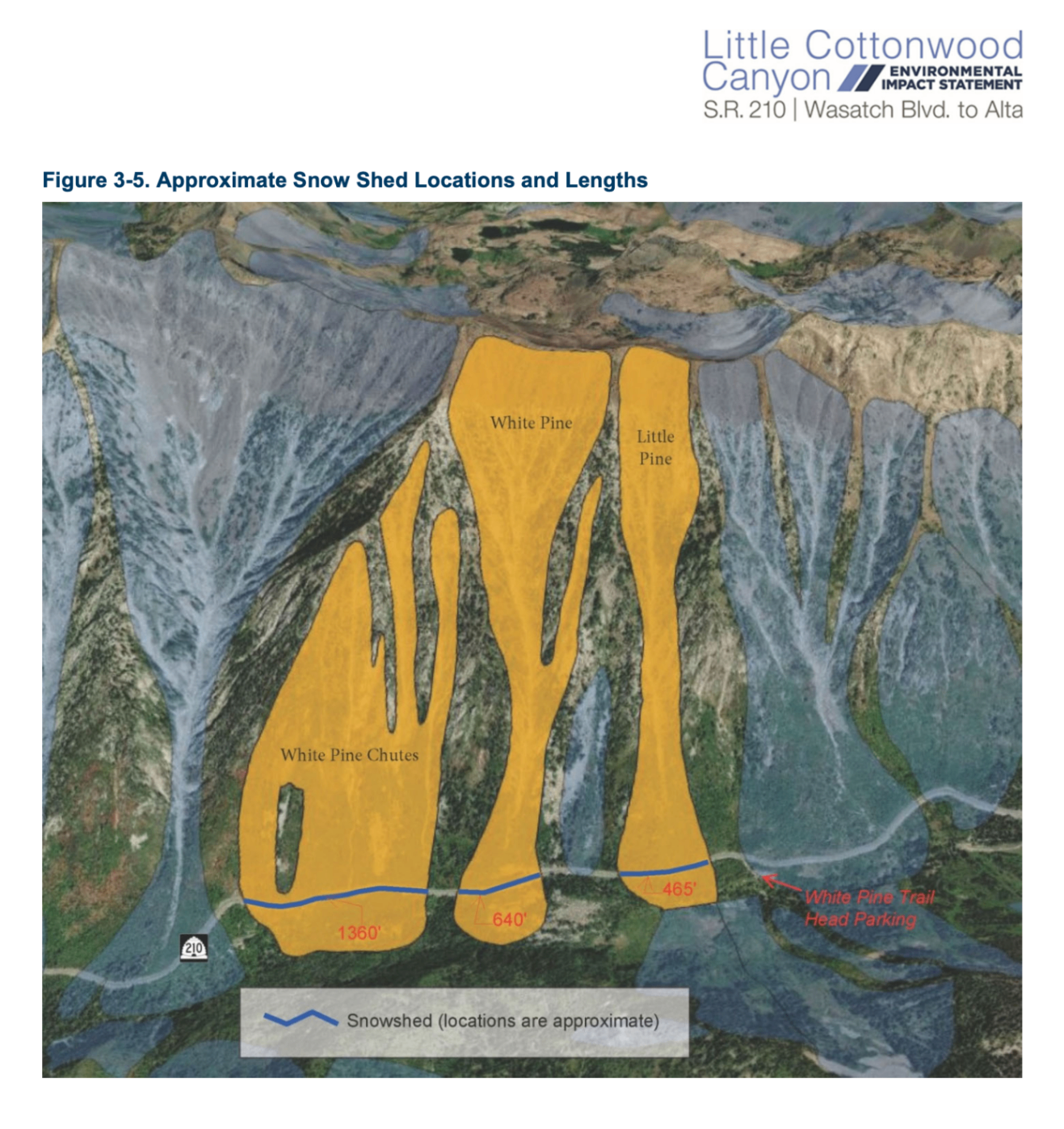
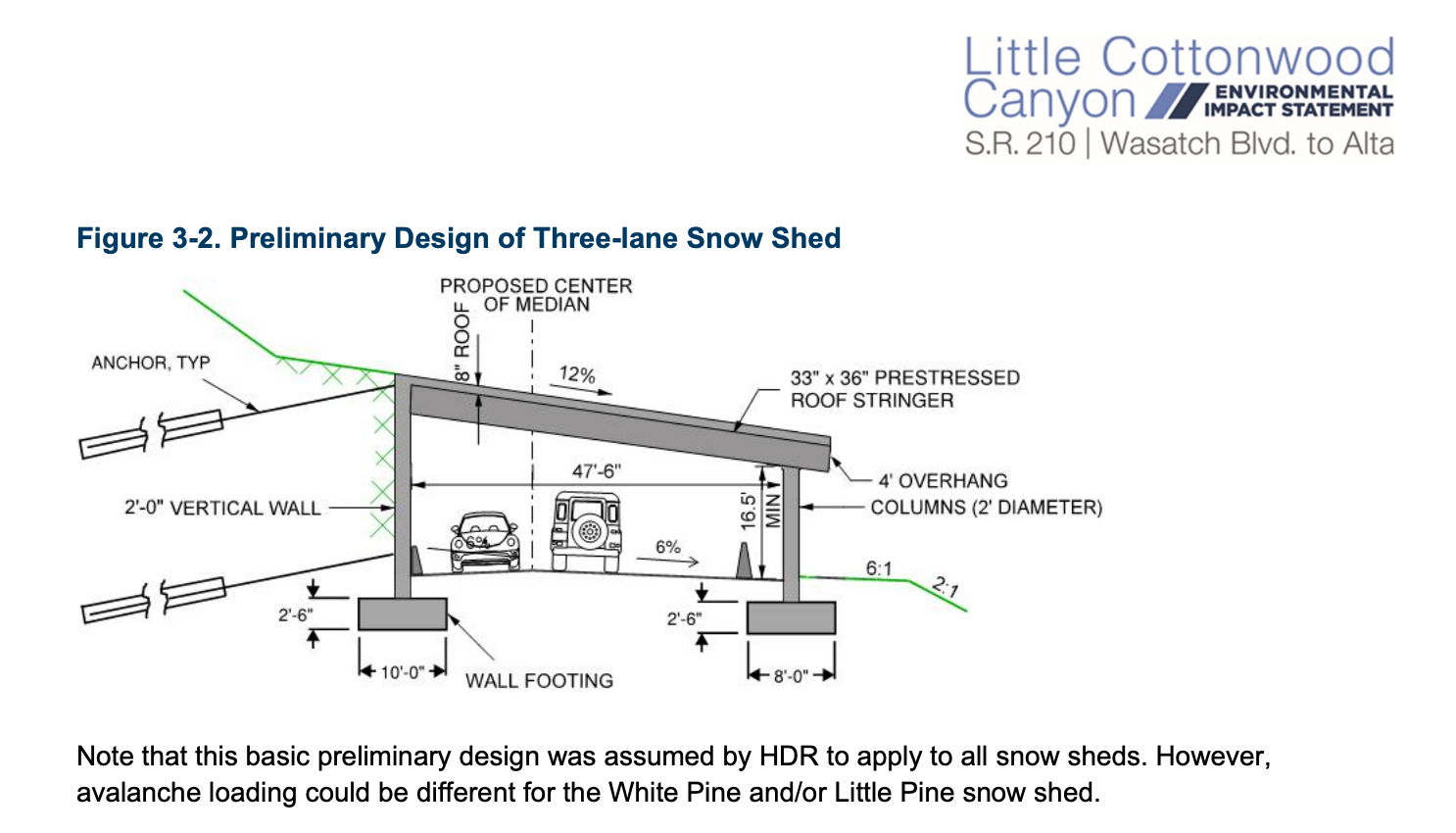
Snow sheds are designed to protect sections of SR-210 from avalanches, reducing road closures and improving winter reliability. According to UDOT's Final EIS (August 2022) and Record of Decision (ROD, July 2023), LCC experiences an average of 10.8 avalanche closures per year (totaling 56 hours), with 98 avalanches hitting the road in heavy seasons—primarily in mid-canyon areas like Hellgate and Superior.
The sheds would cover these prone segments (e.g., rail/road alignments), allowing safer passage for vehicles and buses during storms. However, this "need" is overstated:
The EIS admits proactive measures like enhanced avalanche forecasting, plows, and tolling could address closures without sheds, aligning with best practices in other high-snow areas (e.g., Colorado's tandem plowing).
Critics argue sheds prop up the gondola by bundling them in Phase 2, ignoring that buses/tolling alone handle demand without $180M+ in concrete.
Costs/Budget: $180M+ Escalated, Part of $2B Bloat
The snow sheds' estimated cost has escalated significantly due to inflation and supply chain issues, as detailed in UDOT's January 2022 Cost Escalation Memo and Final EIS:
- Base Estimate (2020 Prices): $141 million for mid-canyon road and rail snow sheds (covering avalanche-prone sections).
- Escalated Cost (2022 Prices): Updated to about $180 million after a 27% increase (from $86M to $109M for road sheds alone, plus rail components)—reflecting 10–32% overall project hikes.
- Total Phase 2 Budget: $260 million (including sheds, trailhead improvements, and additional buses), but sheds are the bulk (~70%). This doesn't include life-cycle operations/maintenance (e.g., $600K annual reserves for major equipment) or potential overruns (25%+ contingencies, as in similar UDOT projects like I-15).
- Funding Source: Part of $393.7M appropriated since 2017 (e.g., SB2 2023 diverted $150M+ to Phase 1/2), from food/fuel taxes —Alternatively, $180M could fund 600+ snowplows or expanded buses for immediate relief...)
-
WINTER MOUNTAIN ROADS - BEST PRACTICES in the USA, EUROPE & JAPAN
Drawing from regions with similar heavy snowfall and ski tourism (e.g., Colorado Rockies, European Alps, Japanese Alps), effective winter maintenance emphasizes proactive technology, coordinated operations, and sustainable methods. These areas maintain high-traffic mountain roads with fewer prolonged closures than LCC, prioritizing safety with efficient plowing, enforcement, and eco-practices suffice.
Colorado Rockies: Aspen, Vail, I-70 Corridor
Colorado Department of Transportation (CDOT) handles over 9,000 miles of snowy roads, including access to ski towns like Aspen and Vail. Best practices focus on efficiency and safety, reducing closures compared to LCC's frequent shutdowns.
- Plowing Schedules and Techniques:
- Tandem Plowing: Multiple plows operate in staggered formation to clear all lanes in one pass. This is illegal to pass (fines up to 0 + points), ensuring plows work uninterrupted. CDOT deploys tandem teams 24/7 during storms, clearing roads faster than single-plow operations in LCC.
- Priority Levels: High-traffic ski access roads (e.g., CO-82 to Aspen) are plowed first, with continuous patrols. Plowing starts at 2-4 inches of snow, repeated every 2-4 hours in heavy storms—more aggressive than UDOT's reactive approach in LCC.
-
- Maintenance Decision Support System (MDSS): Real-time data on road temperature, weather forecasts, and de-icer needs guide operations. This optimizes chemical use (e.g., liquid de-icers pre-storm) and reduces costs by 10-20%.
- Comparison to LCC Deficiencies: LCC could adopt tandem plowing to cut clearing times, potentially halving closures. MDSS would address inconsistent plowing by predicting needs, avoiding the "deteriorating conditions" UDOT often reports. Colorado's methods keep I-70 (a similar high-volume mountain route) open more reliably —proving enhanced plowing suffices for ski access.
- Plowing Schedules and Techniques:
Jackson Hole, Wyoming (Teton Pass and Surrounding Roads)
Jackson Hole's Teton Pass (WY-22), a steep, avalanche-prone route to Grand Teton National Park and Jackson Hole Mountain Resort, faces snowfall comparable to LCC (averaging 400-500 inches annually at higher elevations) and handles heavy ski traffic. Wyoming Department of Transportation (WYDOT) maintains it with practices that minimize closures far better than UDOT's reactive approach in LCC.
- Strict Chain Laws and Enforcement: WYDOT enforces two-level chain requirements (Level 1: chains or AWD/4WD with snow tires; Level 2: chains mandatory for all) during storms, reducing accidents by restricting unprepared vehicles—unlike LCC's lax Traction Law enforcement that leads to crashes and plow delays. Closures occur proactively for avalanche mitigation (e.g., using explosives), but reopen quickly (often within hours) via tandem plows and public alerts via 511 app/radio.
- Public Education and Preparedness: Drivers are advised to carry shovels, emergency kits, and use lower gears on descents, cutting spinouts that exacerbate LCC's backups. Teton County contracts for 24/7 patrols, emphasizing "Winter Wheelin'" guidelines like tandem plowing and anti-icing pre-storms.
- Comparison to LCC Deficiencies: Teton Pass closures average once a week in heavy winters (vs. LCC's daily risks), thanks to efficient avalanche control and equipment—proving LCC could upgrade for -10M (e.g., more plows and sensors) instead of the gondola's bloat. No 8 mile gondola needed here; just smart, affordable practices that keep roads open for skiers without environmental harm.
Montana Ski Areas (Big Sky, Bridger Bowl, and Surrounding Roads)
Montana's ski regions, like Big Sky Resort (near Bozeman) and Bridger Bowl, endure 300-500 inches of annual snow with lake-effect storms similar to LCC, yet Montana Department of Transportation (MDT) and resorts maintain access roads (e.g., US-191 to Big Sky) with innovative, eco-focused practices that outpace LCC's outdated methods.
- Eco-Friendly Snow Management: Big Sky pioneered wastewater-to-snowmaking (approved by Montana DEQ in 2025), reducing road salt runoff that pollutes watersheds—directly addressing LCC's de-icer environmental issues. MDT uses tandem plows and GPS-optimized routes to clear efficiently, limiting idle times and fuel use. Resorts like Big Sky employ renewable diesel for groomers/snowcats, extending to road ops for lower emissions.
- Community and Priority Plowing: Montana emphasizes "snow blower etiquette" and local contracts for rapid response in ski zones, with priorities for resort access roads cleared first (every 2-4 hours in storms). Big Sky's guidebook promotes native landscaping to reduce roadside snow buildup.
- Comparison to LCC Deficiencies: Montana handles heavier, more variable snow with fewer prolonged closures by integrating sustainability and efficient plowing with tandem plows. This keeps public roads accessible.
Lake Tahoe, California/Nevada (Donner Pass, SR-89, and Surrounding Roads)
Lake Tahoe's ski areas (e.g., Palisades Tahoe, Heavenly) see 300-500 inches of snow yearly, with Sierra storms dumping feet rapidly on roads like I-80 and SR-89. Caltrans and Nevada DOT (NDOT) use comprehensive plans that prioritize safety and ecology, far outperforming LCC's inconsistent plowing.
- Tiered Snow Removal Priorities: South Lake Tahoe's plan categorizes roads (e.g., arterials first, then residential), using tandem plows and anti-icing liquids pre-storm for quick clearing—reducing black ice that plagues LCC. Eco-materials like brine/sand mixes protect Lake Tahoe's clarity, minimizing runoff vs. LCC's salt-heavy approach.
- Chain Controls and Driver Prep: Strict chain requirements (R1-R3 levels) with checkpoints prevent unprepared vehicles, plus tips like frequent car washes to remove sand. NDOT advises route planning to avoid icy areas, with vehicle checks (brakes, antifreeze) emphasized.
- Comparison to LCC Deficiencies: Tahoe clears 1,100+ miles with fewer disruptions by focusing on prevention and ecology.
Europe (e.g., Alps: Chamonix, France; Zermatt, Switzerland; Austrian Alps)
European Alps roads (e.g., access to Chamonix or St. Moritz) face extreme snow (up to 10m annually) but maintain high service levels through structured, multi-level maintenance. Countries like Switzerland and Austria emphasize eco-friendly practices.
- Plowing Schedules and Techniques:
- Service Levels by Road Priority: Roads are categorized (e.g., Level 1: Major ski routes cleared 24/7; Level 2: Secondary paths plowed post-storm). In Austria, plows operate in shifts starting at 1-2 inches, with salt/sand mixes applied preemptively. Schedules ensure clearing within 2-4 hours after snowfall ends—faster than LCC's variable response.
-
- Anti-Icing and Friction Control: Pre-wetting salt with brine reduces usage by 30%, minimizing environmental impact. In Switzerland, geothermal or electric heating melts snow on key passes (e.g., Gotthard Tunnel approaches), similar to Japan.
- Integrated Avalanche Management: Remote sensors and explosives prevent build-up, with minimal closures (e.g., France's A40 to Chamonix uses predictive modeling).
- Comparison to LCC Deficiencies: Europe's tiered system would prioritize SR 210's upper sections, reducing avalanche-triggered closures. Lower salt use addresses LCC's watershed concerns. Alps roads stay open for ski traffic, relying on efficient plowing.
- Plowing Schedules and Techniques:
Japan (e.g., Hokkaido: Niseko; Japanese Alps: Hakuba)
Japan's "snow country" (e.g., Hokkaido with 5-10m annual snow) uses innovative, low-labor methods for roads to ski towns like Niseko, emphasizing melting over removal.
Plowing Schedules and Techniques
- Heated Roads and Sprinklers (Shosetsu System): Geothermal groundwater (heated naturally to 20-30°C) is pumped through underground pipes and sprayed via road-embedded sprinklers. Activated during storms, it melts snow in real-time on high-traffic routes. In Sapporo, systems cover 1,300+ meters, operating 24/7 in winter with minimal manual plowing.
- Priority and Automation: Roads to ski areas (e.g., Route 58 to Niseko) are Level 1, cleared first with tandem plows and brine. Schedules: Plowing every 1-2 hours in storms; heating systems run continuously in sub-zero temps.
- Eco-Friendly Channels (Ryusetsuko): Roadside water channels carry meltwater and debris away, preventing refreezing.
- Comparison to LCC Deficiencies: Japan's melting tech eliminates salt corrosion and frequent plowing needs, addressing LCC's environmental and closure issues. Japan's systems cost ~-2M/km to install —and keep roads open reliably for ski access.
Snowfall Comparison Breakdown
LCC's ski resorts (Alta and Snowbird) average around 500-545 inches (12.7-13.8 meters) annually, based on long-term historical data from the Alta Guard station and resort reports. This makes it one of North America's snowiest canyons, with intense lake-effect storms dumping feet of powder quickly.
Japan's "snow country" (yukiguni) regions, however, routinely match or surpass this:
- Hokkaido (e.g., Niseko): Averages 551-591 inches (14-15 meters) at resort levels, with peaks over 20 meters in extreme years. For instance, Niseko United recorded 12.83 meters at village level in 2024/25 (higher on slopes), and mid-mountain totals hit 17.2 meters in 2012/13. Prefecture-wide, Hokkaido averages 3.83 meters, but ski zones amplify this due to coastal winds and elevation—directly comparable to LCC's storm-driven accumulations.
- Japanese Alps (e.g., Hakuba): Averages 394-433 inches (10-11 meters) across the valley's resorts, with records up to 7.82 meters in 2024/25. Nagano Prefecture (home to Hakuba) averages 4.23 meters overall, but mountain areas see intensified snowfall similar to LCC's upper canyon.
Broader snowiest spots in Japan, like Aomori (7.92 meters average) or Yamagata Prefecture (6.36 meters), further illustrate the scale—often exceeding LCC's totals in raw volume and frequency. These areas endure "lake-effect" snow from the Sea of Japan, mirroring Utah's Great Salt Lake effect, with rapid dumps that demand robust clearing systems.
The yuusetsu systems thrive in Japan's heavier, more persistent snow without closures or environmental harm from salt—proving they could transform SR-210 for -56M upfront (vs. the gondola's bloat). If Japan handles comparable (or worse) conditions on high-traffic ski roads, Utah can too.
Installing a Japanese-style yuusetsu (snow-melting) system on SR-210 in Little Cottonwood Canyon would be a game-changer for winter road maintenance, keeping the canyon open reliably without the environmental damage from salt, the hazards of frequent plowing.
This proven technology—using underground pipes to spray or circulate warm groundwater—has kept roads CLEAR in Japan's snowy regions for DECADES at a fraction of the gondola's footprint and expense.
Key Assumptions for SR-210
- Road Length: The relevant portion for snow melting is the canyon section from the mouth (near the SR-210/SR-190 intersection in Cottonwood Heights) to Alta, totaling approximately 18.6 km (11.6 miles). This focuses on the avalanche-prone, high-elevation area where winter closures are most severe; the short valley segment below doesn't need it.
- System Type: Based on Japan's yuusetsu systems (sprinklers or embedded pipes using natural warm groundwater or geothermal heat), which are recirculating to minimize waste and costs. Utah's geology (with potential geothermal sources in the Wasatch Front) could adapt this affordably, avoiding energy-intensive boilers.
- Cost Basis: Estimates draw from Japanese implementations and similar hydronic/geothermal systems (e.g., in the U.S. and Canada), adjusted for scale. Japan's systems emphasize low running costs via natural heat, but installation involves pipes, pumps, and wells. Assume a standard two-lane road width of ~10 meters for area calculations (10,000 m² per km).
Installation Costs
- Per km Estimate: $1.3 million to $3 million, based on hydronic snow-melting systems (pipes embedded in pavement for circulating warm water). This aligns with Japan's geothermal yuusetsu systems, where initial costs are higher than basic plowing setups but have been reduced by up to 75% through innovations like using existing infrastructure (e.g., building foundations as heat exchangers). Sprinkler variants (spraying groundwater) could be on the lower end, while full embedded pipes (for recirculation) trend higher.
- Total $24 million to $56 million. This is a one-time investment—dramatically less than the gondola (which also requires massive land disruption and years of construction chaos). Costs could drop further with Utah-specific adaptations, like tying into local hot springs or sewage heat recovery, which Japan has piloted to cut energy needs by 90%.
Annual Maintenance and Operating Costs (Winter Season)
- Per km Estimate:
- Operating Costs: $5,000 to $15,000 per year. Primarily electricity for pumps (circulating or spraying water). Japan's systems run at 1/4 the cost of electric cable alternatives due to natural heat sources, with only pump power needed—no fuel for boilers. Scaled from U.S. geothermal examples (e.g., ,600 per km for a similar system covering ~10,000 m²), but Japan's efficiency reduces this by 75-90% via groundwater recirculation.
- Maintenance Costs: $1,000 to $2,500 per year. Include inspections, pump repairs, and pipe cleaning. In Japan, these are 1/20th of conventional electric systems due to simpler, durable designs. $110,000 to $320,000 total per year.
Overview of SR210 Winter Road Maintenance Deficiencies
REAL SOLUTIONS: Additional Buses + Dedicated Snowplows
For ONLY 5% of the gondola's cost
Additional Buses Provides 5,190 people per hour capacity
Dedicated Canyon Snowplows clears roads faster for better, safer throughput
— far more reliable, flexible and weather-proof than the proposed gondola
Immediate congestion relief • No canyon scarring • No $2B+ debt • No resort subsidy
Utahns Demand Buses & Snowplows Instead